For more information about table variables, see table (Transact- SQL ). Specifies a table that the returned rows are inserted into instead of being returned to the caller. If column_list is not specifie the table must have the same number of columns as the OUTPUT result set. Id WHERE Baz = But now, how do I get this into a variable? SQL Server CTE - SELECT after UPDATE using OUTPUT. It even supports with a MERGE.
It can work on INSERT, DELETE, UPDATE, and MERGE statements. I will take you through examples of each. The two special prefixes are “inserted” and. That is why I like what I see with the INSERT- OUTPUT construct.
In the code below, the OUTPUT Updated. FROM in the UPDATE and replacing it with a static value works fine. BirthDate OUTPUT inserted.
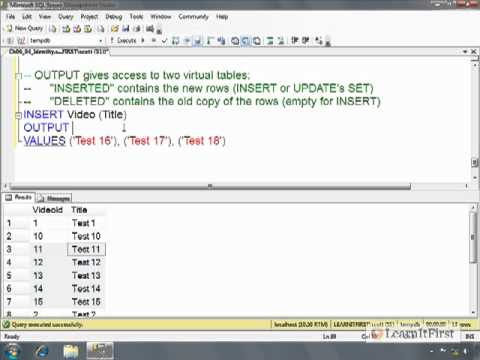
Now I have looked at the behaviour of OUTPUT within the MERGE command. OUTPUT clause can be used to return values to client clause. Generally when you do an UPDATE statement you only get a row count returne you don’ t generally get a result set showing what was changed. The OUTPUT command can be added to your stored procedures or T - SQL scripts in order to write the data out to an auditing table or return the data back to the front end client. You might often perform deletes, inserts and updates using T - SQL and might have requirements to re-use the affected rows.